Canine Massage Therapy
What is Canine Massage ?
Canine massage is the therapeutic application of massage techniques applied to the dog by the manipulation of the soft tissues to help achieve improved health and wellbeing, treat, or prevent injury and assist with recovery.
Massage is an all-over beneficial treatment that can be tailored to suit the dog’s specific needs. It greatly improves circulation thereby promoting a good supply of nutrients to the muscle groups to keep them healthy, it helps to dispel toxins and increase oxygenation for better metabolism. Massage also releases tension and aids mental relaxation, resulting in a happier dog.
It is designed to help resolve common muscular issues such as myofascial pain, trigger points, and rehabilitate/recondition soft tissue injuries. Supporting orthopaedic conditions, mobility and movement, and pain management, which can have a detrimental effect on behaviour and quality of life.
Massage can benefit all dogs, but may be especially helpful in supporting the following conditions:
- Osteoarthritis
- Hip & Elbow dysplasia
- Cruciate injuries
- Spondylitis
- Muscular injuries
- Compensatory issues
- Chronic pain
- Pre- and Post-Event Massage for working and sporting dogs
- Anxious dogs
Massage may be beneficial if your dog is displaying any of the following:
- Lameness or limping
- Yelping or crying when touched
- Reluctance to be stroked or groomed
- Changes to gait
- Difficulty going up or down the stairs, or jumping on and off the sofa, into or out of the car
- Performance changes in working or sporting dogs
- Increase in anxiety or changes in behaviour
- Nibbling or chewing paws or limbs
- Reluctant to go for walks or walking more slowly
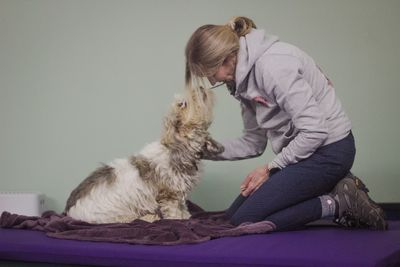
Massage Therapy what to expect

How long does it take for clinical massage to take effect?
Canine Massage is a non-invasive therapy for dogs that rehabilitates them from muscular injury and helps to support orthopaedic issues such as arthritis, and is suitable for sporting dogs, senior dogs and puppies.
Improvements in a dog's condition from canine massage are typically visible within 1 to 3 sessions. The initial course of treatment, ideally conducted over a period of three to five weeks, is usually sufficient to determine if massage will be effective for the specific condition or issue.
Potential results seen in 1-3 sessions:
- Improved mobility and activity levels.
- Resolution or reduction of lameness/limping and stiffness.
- Return to normal posture and gait.
- Able to return to activities of daily living, e.g. up/downstairs, walks.
- A happier dog, more willing to be examined and groomed.
As per the Veterinary Surgeons Act 1966 we will request veterinary consent forms before your dogs' treatment. If during any massage treatments it is deemed appropriate to consult your Vet for investigation/diagnosis, then you will be informed, and this will be detailed in the report to the referring vet.
Initial Consultation 60–90 minutes £60
Every dog is different, therefore each session is tailored to suit your dog's individual need. At our first meeting, I will get to know your dog and ensure they are at ease, and relaxed with me, and the clinic environment, which is deliberately laid out to be homely and comfortable.
During assessment, the following will be undertaken:
- Full medical history, lifestyle and home environment evaluation.
- Initial assessment of your dog, including gait and postural analysis.
- Superficial palpation of the muscles to assess tissue health, injury and areas of concern.
- Remedial massage session.
- A discussion with you on expectations of the therapy and development of a management plan.
- Aftercare advice will be provided.
You will be asked to complete an owner questionnaire prior to your appointment to gather pre-assessment information.
Maintenance Massage 45–60 minutes £40
Subsequent sessions will include a review of your dog, and any changes you have noticed, along with any progress or concerns.
Pre-Event\Post-Event Massage 35–40 minutes £35
This is suitable for sporting dogs and working dogs before or after events. It is aimed at optimising performance and reducing the risk of injury.
Puppy Massage 30 minutes £25
Puppy massage sessions are shorter and tailored specifically for puppies. It can help with growing pains during the puppies' development, encourages relaxation and reduces stress and anxiety. Importantly, it also helps your puppy become used to handling and being examined.
Course of Treatment £100
Includes:
- Three maintenance massages.
Only available following an initial consultation.
Canine Lifestyle Modification for Health & Rehabilitation Home Visit
Most of the lifestyle modification programme is included as part of massage therapy treatment, as it is required to provide the best possible rehabilitation/maintenance programme and outcome for your dog. However, in some cases a home visit may be necessary, or you may feel it is more appropriate for your specific circumstance or your dog's individual needs.
Initial consultation 60–90 minutes £80.00
Every dog is different, so each session will be tailored to suit your dog's individual needs. At our first meeting, I will get to know your dog and ensure they are comfortable with me.
- Full medical history, lifestyle and home environment evaluation.
- Advice re your specific home/environment modifications
- Initial assessment of your dog including gait and postural analysis.
- Superficial palpation of the muscles to assess tissue health, injury and areas of concern.
- Remedial massage session.
- A discussion with you on expectations of the therapy development of a management plan for your dog.
- Aftercare advice will be provided.
You will be asked to complete an owner questionnaire prior to your appointment to gather pre-assessment information.
Subsequent home visits for Maintenance Massage 45–60 minutes £50
Course of treatment £135.00
- Three maintenance massages.
Only available following an initial consultation.
The above prices apply to client residences within 5 miles of YO12 7BE. For additional miles a mileage fee of 50p per mile each way will be applicable.
Pet Insurance
Many pet insureres will cover the cost of complimentary therapy for your dog if they have been referred for treatment by a vet. Please check with your insurance company prior to any appointment if required.
Canine Lifestyle modification for health and rehabilitation
Support
When your dog is diagnosed with a health issue, particularly limiting diseases such as arthritis or hip dysplasia, there will be an impact on the whole family. Altering your dog's lifestyle and change in routine can be challenging. You may feel overwhelmed by the new situation you find yourself in with your dog, but you can use this change positively.
Change is good for you and your dog, change is achievable with minimal disruption to your life, and change doesn't mean decline, it means modification.
At a time when your dog may be more emotionally and physically vulnerable because of pain and restricted mobility, we can help you meet your dog's needs and alleviate some of the stress involved when caring for a less active dog. We can help you to optimise your dog's care to complete wellbeing
Home and environment adaptation
A musculoskeletal (MSK) injury or condition such as hip dysplasia or disease such as arthritis will affect your dog's usual daily routine. Very often, areas within the home require some alteration to prevent further injury and ensure rehabilitation can continue most effectively. We can assess your home and I can provide advice on how to modify things to help with your dogs' recovery in rehabilitation or long term care.
In many cases dogs will need their daily exercise reducing to enable healing to take place, the use of new equipment maybe necessary to limit mobility and reduce stress on vulnerable joints and muscles.
Some dogs will be required to lose weight. Obesity in dogs is a significant problem which exacerbates MSK issues, we can help with the practicalities of weight loss and management.
Behaviour modification and training
When a dog is diagnosed with a condition that affects mobility, the physical limitations may be significant enough to slow the dog down. However, in many cases, dogs are not aware of their own limitations and need your help to prevent further damage.
Dog guardians and carers will need to be more vigilant to prevent further damage being done, and be proactive in reducing behaviours that may compound their dogs' health issues. We can help by teaching you how to modify behaviours such as jumping up or pulling on the lead, which can exacerbate symptoms, and impact the effectiveness of rehabilitation and treatment.
Teaching new behaviours may be needed, such as crate training for dogs that will require more confinement.
Basic foundation training may be appropriate to help with ground exercises prescribed by therapists for owners to carry out at home.
Enrichment
Many dogs will adapt to new situations without much complaint or outward signs of distress. Very often, dogs will continue to pursue high intensity exercise such as chasing a ball. This is because during high energy exercise transient excitatory brain chemicals are released, these chemicals temporarily conceal the pain and consequent repetitive damage that some high intensity movements cause. In order to reduce this risk, it is necessary to redirect exercise and play, to more measured and appropriate activities.
When mobility becomes limited and your dog's exercise is curtailed, it is important and kind to keep the dog's brain occupied and fulfilled.
Brain games and interactive toys are a great way of providing enrichment for your dog, especially those that involve the dog's nose! Taking up new activities which embrace low impact physical exercise and high mental stimulation will tire your dog and give you both a new shared interest.
Trailing and scent work are perfect for dogs with limitations, providing functional exercise that's immense fun for you and them!
Alleviating boredom with enrichment will also help prevent destructive behaviours such as inappropriate chewing or barking.